
Solar Panel Impact Protection
SolarNet® Solar Panel Protection
Protection for solar panels exposed to golf balls, hail, baseballs and repeated direct impact.
Dollens Electric evaluates and installs SolarNet protection systems for existing rooftop and ground-mounted solar arrays in San Jose, the South Bay and select projects throughout California.
Repeated Impact Changes the Question
Repairing One Broken Panel Does Not Remove the Risk
A single damaged solar panel may be an isolated event. Repeated damage is different.
If your home sits beside a golf course, driving range, ball field or another predictable impact area, replacing the damaged module may restore the solar system without solving the reason the damage occurred.
That is when it makes sense to consider physical protection for the array.
SolarNet Protection Options
Match the Protection to the Actual Risk
Different hazards call for different netting, spacing and installation considerations. We start by identifying what is actually threatening the solar array.
Golf Ball Protection
Designed for solar arrays exposed to golf-ball impacts, including homes near fairways, tee boxes, driving ranges and course-side impact zones.
Hail Protection
A tighter protection option for solar arrays where damaging hail creates an ongoing physical-impact concern.
Baseball & Recreation Protection
Protection for solar arrays near schools, parks, baseball fields and other areas where larger balls may repeatedly strike the array.
Real Dollens Electric Project
From Broken Solar Panels to Physical Protection
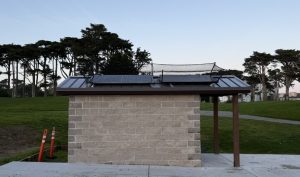
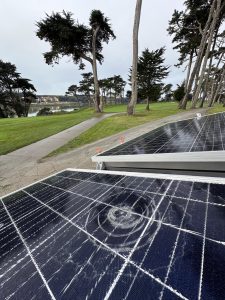
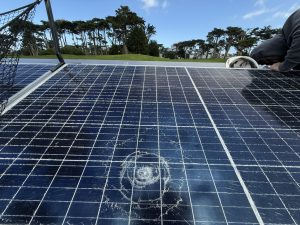
At TPC Harding Park in San Francisco, Dollens Electric encountered solar modules with direct golf-ball impact damage.
This is the type of situation where repairing the damaged solar equipment is only part of the solution. The array remains in the same impact environment after the repair.
Dollens Electric installed SolarNet protection above the exposed array to help reduce the risk of future strikes.
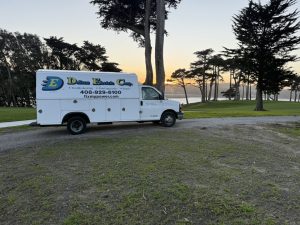
These are actual project photographs from the installation.
Is SolarNet Right for Your Property?
Not Every Solar Array Needs Physical Protection
SolarNet makes the most sense when there is a real and repeatable physical-impact risk.
SolarNet May Be Worth Evaluating If:
- Your panels have already been struck by golf balls.
- Your home borders a golf course or driving range.
- Nearby properties have experienced similar damage.
- Your solar array sits near a ball field or recreation area.
- The impact risk is predictable and ongoing.
- Another damaged replacement module could be difficult or expensive to source.
SolarNet May Not Be the First Step If:
- There is no meaningful history of physical impact.
- Your problem is actually inverter or electrical failure.
- The system is underproducing for unrelated reasons.
- The concern is primarily battery storage or utility bills.
- The existing solar system needs repair first.
Professional SolarNet Installation
The Solar Array Still Has to Work After the Net Is Installed
Panel layout, attachment method, roof conditions, equipment access, airflow and future serviceability all need to be considered.
Evaluate the Exposure
Determine where impacts originate and which portion of the solar array is actually at risk.
Review the Solar Array
Review panel configuration, roof access, existing equipment and the condition of the solar system.
Plan the Protection
Match the protection approach and layout to the actual impact risk and array configuration.
Maintain Service Access
Protect the array while keeping appropriate access for inspection, repair and future equipment replacement.
An Important Consideration
Protection Has to Be Balanced With Solar Performance
Any material positioned above a solar array can affect the amount of sunlight reaching the modules.
That does not automatically make protective netting a poor choice. It means the benefit should be weighed against the property's actual impact exposure.
Already Have a Broken Panel?
Repair the Existing Solar Problem Before Protecting It
SolarNet is not a substitute for repairing damaged solar equipment.
If a panel is cracked, the system stopped producing, the inverter is showing a fault, monitoring went offline, or the original installer is gone, Dollens Electric can evaluate the existing solar system first.
Once the existing condition is understood, protection can be considered separately if the property remains exposed to repeated impact.
SolarNet Installation
San Jose, the South Bay & Select California Projects
Dollens Electric is based in San Jose and serves homeowners throughout Santa Clara County and the surrounding South Bay.
Because SolarNet is a specialty service, appropriate installation projects may also be considered outside our normal electrical-service area.
Existing Solar Support
Related Dollens Electric Solar Services
Solar Panel Protection FAQ
Common SolarNet Questions
Can golf balls really break solar panels?
Yes. A direct impact can crack module glass or otherwise damage a solar panel depending on the force, angle, location of the strike and condition of the module.
Is SolarNet only for homes near golf courses?
No. Golf-course properties are one of the clearest use cases, but protection may also be appropriate for arrays exposed to hail or larger ball impacts near schools, parks and athletic fields.
Will SolarNet guarantee my panels cannot be damaged?
No protective system eliminates every possible impact risk. SolarNet is intended to help reduce exposure to specific physical impacts.
Will protective netting affect solar production?
Netting can create some shading because material is being positioned above the modules. Product choice and layout should therefore be balanced against the property's actual damage risk.
Can SolarNet be added to an existing solar system?
Yes. Existing rooftop and ground-mounted arrays may be candidates when they are exposed to repeated physical impact. The array and installation conditions should be evaluated first.
What if one of my panels is already broken?
The damaged solar system should be evaluated first. Dollens Electric can determine whether repair or module replacement is appropriate before protection is added.
What if another company installed my solar?
Dollens Electric repairs and services existing residential solar systems, including systems we did not originally install.
Does Dollens Electric install SolarNet outside San Jose?
Appropriate specialty SolarNet projects may be considered outside Dollens Electric's normal South Bay service area. Contact our office with the project location and solar array information.
Protect the Array From Repeat Damage
Is Your Solar System in a Predictable Impact Zone?
If golf balls, hail, baseballs or repeated physical impact are threatening your solar panels, Dollens Electric can review the array, exposure risk and SolarNet protection options.
If the panels are already damaged or the system is not operating correctly, tell us that too. We can start with the existing solar condition before recommending protection.