

SERVICE WITH INTEGRITY
From Our Family to Yours
The Dollens Electric Home Journal
Field Notes • Homeowner Guidance • Real South Bay Projects

This Week’s Featured Article
We Just Wanted an EV Charger. Why Are We Talking About the Electrical Panel?
You want dependable home charging. Let’s make sense of what your house needs—and what it may already have.
The plan sounded simple: put an EV charger in the garage, plug in after dinner, and wake up ready to go.
Then someone mentioned the electrical panel.
Now you have a different set of questions. Is this still a straightforward installation? What is actually necessary? And how do you make a good decision when the estimates seem to describe different projects?
You do not need to become an electrician to get those answers.
Installing an EV charger does not automatically require a new electrical panel or 200-amp service. The answer depends on your home’s existing electrical demand, the charging rate you need, the condition of the equipment, and whether suitable load management can help.
Perhaps you have an older San Jose home with a crowded panel. Perhaps there is already solar on the roof, a battery in the garage, or a heat pump on next year’s project list. You want convenient charging, but you also want someone to understand how everything fits together.
At Dollens Electric, we start with your home and your driving routine. Whether the answer is a straightforward charging circuit or a more involved electrical project, you should understand what is being recommended and why.
The EPA’s home-charging guidance explains why driving needs, existing capacity, and charging options belong in the same conversation.
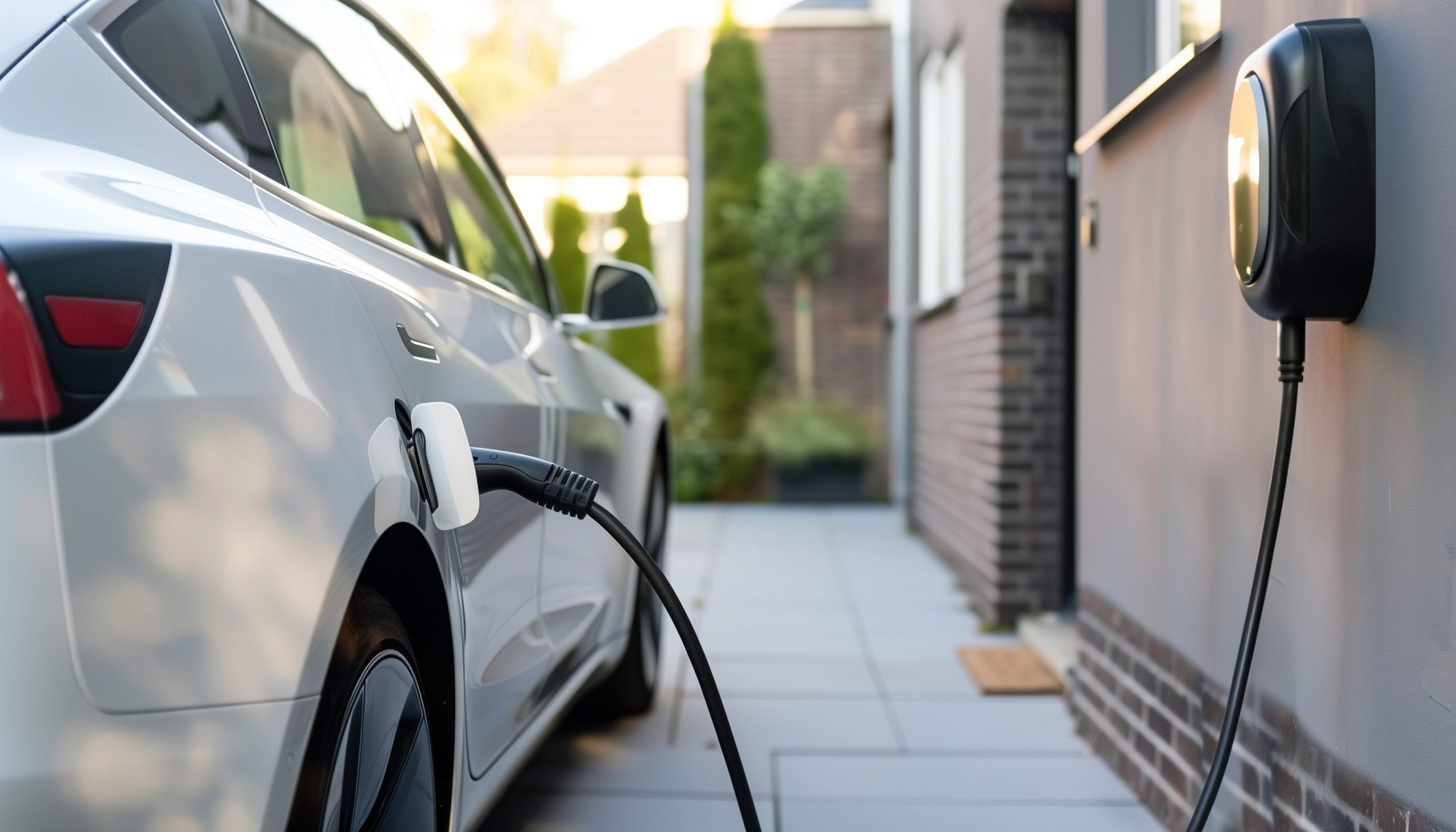
Why We Check the Panel Before Adding an EV Charger
Your car is joining the household. Your electrical service already supports cooking, cooling, laundry, lighting, and whatever else makes your house run.
A Level 2 charger adds a sustained electrical demand, potentially for hours. That is why we look at the electrical system behind the charger—not just the wall where it will hang.
The number on the main breaker is one part of the picture. A load calculation helps us evaluate how the proposed charging demand fits with the home’s existing electrical loads. Simply adding up breaker labels—or noticing that your breakers have never tripped—does not establish how much new load the service can support.
An empty breaker space means there may be room for another circuit. It does not establish that the service has capacity for the added load. We check both.
The finished installation may look like one tidy box on the wall. The planning behind it is what connects that box to the way your household actually uses electricity.
How Fast Do You Actually Need to Charge?
It is easy to shop for the biggest charging number. Nobody buys a new car hoping to spend more time waiting for it.
But home charging usually happens while you are doing something else. Sleeping is a particularly good example.
The useful question is: How much driving do you need to replenish before you leave again?
Level 1 uses a suitable standard 120-volt outlet and charges more slowly. Residential Level 2 charging uses a 240-volt supply and offers more power, with different charging rates available. Your driving routine and time at home help determine which setup makes sense.
An appropriately selected lower-power Level 2 installation may cover your routine. A long commute, short charging window, or second EV may point toward a different design. The vehicle also has its own charging limit; a higher-rated charger cannot make it accept more power than it supports.
When adjustable equipment is appropriate, we configure its approved charging limit to match the circuit and electrical design. A promise to turn it down in an app is not a substitute for a properly configured installation.
The U.S. Department of Energy’s home-charging overview explains Level 1, Level 2, and why available charging time matters.
The goal is not the biggest number on the box. It is charging that fits your life.
Can Load Management Help Avoid a Service Upgrade?
Sometimes a home has limited spare capacity, but its largest electrical loads do not need full power at the same time.
Compatible dynamic load-management equipment monitors household demand and automatically reduces or pauses EV charging when necessary. When demand falls, charging can increase again within the installation’s configured limits.
Picture an evening when the dryer is running and dinner is in the electric oven. The charger gives those loads some room, then picks up the pace later. The house has a referee, and nobody has to stand in the garage with a whistle.
That is different from simply setting a timer. A schedule tells the car when to charge; dynamic load management responds to what the house is actually using.
For a manufacturer example, Tesla describes Wall Connector power management, including dynamic adjustment with compatible, separately installed metering equipment.
Load management can help some homes accommodate EV charging without a service upgrade. It cannot repair damaged equipment or increase the utility service’s physical capacity. We still need to confirm compatibility, the electrical design, and acceptance under the applicable code and permit requirements.
You Do Not Have to Figure Out the Whole Project Before Calling
Maybe you have already chosen a charger. Maybe you are waiting to find out what your house can accommodate before buying one.
Either is a reasonable place to start.
Tell us about your driving routine, where you park, and any other changes you have in mind. If there is already solar or battery equipment at the house, include that in the conversation.
We look at how the new charging circuit fits with the systems already in your home. That matters whether we are considering the panel, the route to the garage, or equipment added during an earlier project.
The purpose of the electrical evaluation is to answer your questions—not expect you to arrive with the answers.
Our home EV charger installation guide explains what we consider when planning equipment, placement, and the charging circuit.
Have a question about your home’s charging setup? Talk to Dollens Electric.
A Full Panel and an Undersized Service Are Different Problems
“You need panel work” can mean several things. Before it becomes a major decision, let’s make the language more specific.
If there is no suitable space for a new breaker, the issue may be circuit space. Depending on the existing equipment and installation, an approved subpanel or another permitted arrangement may address that.
If the equipment is damaged or unsuitable, replacement may be appropriate because of its condition. That is a separate concern from how much power the charger needs.
If the service cannot support the proposed loads, and suitable alternatives do not meet your needs, a service upgrade may be necessary.
These are different problems with different solutions.
A subpanel adds circuit space; it does not increase the home’s electrical service capacity. Likewise, putting a larger-rated panel on the wall does not, by itself, upgrade everything feeding it.
You deserve to know which problem the proposed work is solving.

When the Scope Changes, Ask for the Reason
If your charger estimate grows to include panel or service work, the explanation should be more specific than “that is what you need for an EV.”
We should be able to connect the recommendation to something concrete: the calculated demand, the condition of the equipment, an installation limitation, or a requirement that applies to your property.
We should also explain the alternatives. Could an appropriate charging rate meet your routine? Could approved load management fit? Is the problem breaker space, or the amount of power the home can receive?
Sometimes upgrading now is a practical long-term choice because you are also planning a heat pump, an electric water heater, or another vehicle. That should be explained as planning ahead—not presented as something this one charger automatically requires.
The point is not to avoid an upgrade at any cost. It is to understand when that investment makes sense for your home.
Our main electrical panel upgrade guide explains what a larger project can involve, including service equipment and utility coordination.
Where PG&E and Permits Enter the Conversation
For homes served by PG&E, its home-charging guidance says you may need to upgrade your service or panel. “May” matters. It is not a blanket instruction to replace every homeowner’s panel.
Its guidance also directs customers to contact PG&E and complete a change-of-service application after selecting their charging setup. Keeping the existing panel should not be treated as automatic permission to skip utility coordination.
Local requirements matter, too. San Jose requires an electrical permit for a residential Level 2 charger installation, along with the applicable inspections. Other South Bay jurisdictions have their own permitting processes.
For your project, we confirm the electrical scope and applicable permit, inspection, and utility steps. The utility process needs to match your address and the work being proposed.
A charging-circuit installation and a service upgrade can follow different paths, especially when meter equipment or utility infrastructure is involved. A service change may depend on utility review and coordinated appointments—not just the time needed to install the charger.
You should understand which path your project is taking before you plan around the installation.

If This Were Our House, Here Is How We Would Approach It
We would start with the way we drive and the electrical system already in place.
We would want dependable charging, a sensible installation, and a clear reason for every additional recommendation.
We would compare an appropriately sized charger and suitable load management with an upgrade when those are real options. We would also mention the heat pump planned for next year before anyone finalized the design.
If there is existing solar or battery equipment, we would include it in the review. Solar on the roof does not, by itself, establish spare service capacity—particularly for a car charging after sunset.
Most of all, we would want someone who could explain what matters without making us feel like we need to become electricians before making a decision.
That is the same approach we want for your home.
A Clear Plan. A Charger That Fits Your Life.
You wanted to come home, plug in, and get on with your evening.
Getting there should not leave you guessing about what you are paying for or why the work is being recommended.
Sometimes the existing system can support the right charger. Sometimes load management helps. Sometimes an upgrade is the sound choice.
Once we understand which situation belongs to your house, the project becomes easier to follow.
The car charges. Dinner gets made. Tomorrow’s commute is handled.
And the electrical system gets back to doing its job quietly.
The Dollens Gold Standard
Service With Integrity
For us, that means looking at the system already in your home, explaining the options, and making the recommendation understandable. Necessary work should have a clear reason. Planning for something you may add later should be explained as a choice.
Whether your home needs a straightforward charging circuit or a larger electrical plan, the goal stays the same: a setup that makes sense for the people who live there.
Planning Home Charging in San Jose or the South Bay?
Tell us what you drive, where you park, and what questions have come up. Whether you are starting from scratch or sorting through an estimate, we will help you understand the next step.
From our family to yours.
Homeowner Resources
U.S. EPA: Getting Started with Home EV Charging
Charging choices, driving needs, and electrical-capacity options.
U.S. Department of Energy: Charging at Home
Level 1 and Level 2 charging, installation considerations,
and local requirements.
Tesla: Wall Connector Power Management
A manufacturer example of configured charging limits
and dynamic load management.
PG&E: Electric Vehicle Charging
Home-charging guidance and the change-of-service process.
City of San Jose: Electric Vehicle Charging Stations
Residential permit and inspection requirements.
Technical guidance reviewed . Your equipment, charging needs, utility provider, and property requirements determine which options fit your home.