

Service With Integrity

Whole-House Rewiring in San Jose: When Is It Really Time to Update Your Home’s Electrical System?
An older home does not need new wiring simply because it has been standing for a long time. The real question is what is behind the walls now, what condition it is in, and whether it still fits the way your household uses electricity today.

We work in a lot of older San Jose homes, and there is plenty to love about them.
Hardwood floors. Built-in cabinets. Mature neighborhoods. Houses that have been changed, added onto, remodeled, repainted, rearranged and lived in for generations.
Then there is the electrical system.
Sometimes it has been carefully updated along the way. Sometimes parts of it are original. Sometimes it looks as though every decade since the house was built got one vote.
That last version is not unusual.
It also does not automatically mean the answer is a whole-house rewire.
The first thing we want to know is much simpler:
So When Is It Actually Time to Think About Rewiring?
Usually, the conversation starts because something has changed.
Maybe breakers have begun tripping more often. Maybe lights flicker or dim when a larger appliance starts. Maybe you have outlets that feel loose, receptacles without grounding, or electrical work from an old remodel that nobody can quite explain.
Sometimes there is no obvious problem at all.
You may be planning a kitchen remodel, adding air conditioning, converting to an electric range, installing an EV charger or simply wondering whether the electrical system in a fifty- or sixty-year-old home is ready for another few decades.
Those are all reasonable reasons to take a closer look.
They are not, by themselves, a diagnosis.
Your House May Have More Than One Generation of Wiring
This is one of the most important things to understand about older South Bay homes.
The year the house was built tells us where the story began.
It does not tell us what happened afterward.
A home built in the 1950s may still have some original wiring, while the kitchen was remodeled in the 1980s, a bathroom was updated twenty years later, and the garage picked up another circuit sometime after that.
Add an addition, a previous panel replacement and perhaps one ambitious homeowner with a screwdriver, and the electrical history can become surprisingly layered.
One Address. Several Electrical Eras.
One thing years of working in South Bay homes teaches you is that two houses built in the same year can have very different electrical systems today.
That is why we care about what is actually installed, how it has been altered and what condition it is in—not simply the age printed on the property record.
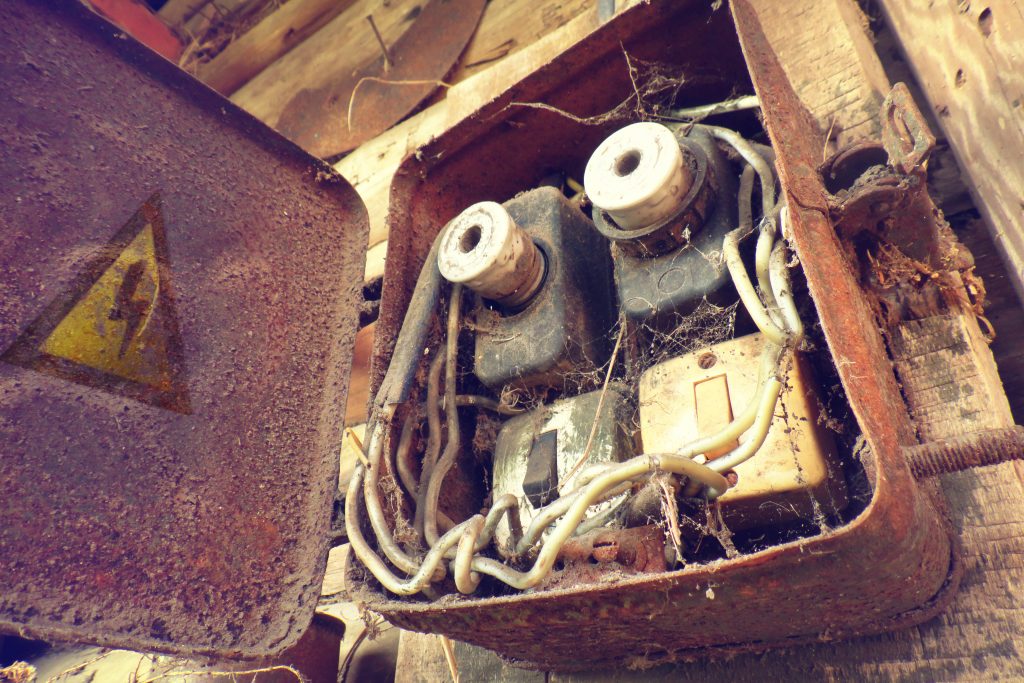
What Does a Whole-House Rewire Actually Mean?
The name makes it sound simple.
Take out the old wires. Put in new wires. Everybody goes home.
Real houses are rarely quite that cooperative.
A whole-house rewire generally means replacing much or all of the older branch-circuit wiring that carries power to the receptacles, lights and equipment throughout the home.
Depending on the existing system and the scope of the project, that may also involve electrical boxes, grounding, receptacles, switches, circuit protection and dedicated circuits for the equipment the household uses now.
The exact scope depends on the house.
That distinction matters because a localized wiring problem is not the same thing as a widespread system condition.
If a problem can be solved with a focused repair, it should stay a focused repair.
If the condition is broader, then a larger rewiring plan may make more sense.
Sometimes Your Electrical System Gives You Clues
Electrical problems do not always arrive with dramatic lighting and a soundtrack.
More often they start as something annoying.
A breaker that used to behave itself begins tripping whenever breakfast gets ambitious. A light dims when the air conditioner starts. An outlet becomes loose. A switch begins buzzing. One room seems to have developed its own opinion about how much electricity should be available.
Those symptoms can come from different causes, so they should not automatically be translated into “rewire the house.”
But repeated breaker trips, persistent flickering, unusual buzzing or crackling, discoloration, damaged insulation, electrical shocks or receptacles and switches that become unusually warm are signs worth taking seriously.
When the Humor Stops
If you smell burning, see active sparking or heat damage, receive a shock, or find an electrical device that is unusually hot, stop treating it as an old-house quirk.
Those conditions may indicate an electrical hazard and deserve prompt evaluation.
The Electrical Safety Foundation International also identifies frequent breaker trips, dimming or flickering lights, buzzing, overheating, damaged insulation and electrical shocks among the warning signs homeowners should not ignore.
What About Knob-and-Tube Wiring?
Knob-and-tube wiring is one of those phrases that can make an older-home conversation suddenly sound much more serious.
It is an older wiring method found in homes from an earlier era, and unlike modern wiring systems it does not include an equipment grounding conductor.
Age alone is not the only concern.
What matters is the condition of the wiring and what has happened around it over the years. Old renovations, added insulation, damaged insulation on the conductors and later alterations can all change the picture.
ESFI describes knob-and-tube as an ungrounded system that can become more vulnerable as it ages or is altered.
If your home still contains knob-and-tube wiring, the useful next step is understanding how much remains and what condition it is in before jumping immediately to a conclusion.
Your 1950s House Did Not Know You Were Buying an EV
This is where older wiring meets modern life.
A South Bay house that once powered lights, a refrigerator, a television and the usual appliances may now be supporting central air, multiple computers, a larger kitchen, electric cooking and an EV charger in the garage.
Next may come a heat pump.
Maybe battery storage.
Maybe another EV.
None of that is unusual anymore.
The important part is understanding whether the electrical system has evolved along with the household.
Today there are better ways to plan around electrical capacity.
Adding a large electrical load does not automatically mean a whole-house rewire or even a larger electrical service.
We first want to know what the home already has, what the actual electrical load looks like and whether the new equipment can be supported by the existing system.
Sometimes a dedicated circuit solves the problem.
Sometimes load management is appropriate.
Sometimes a subpanel or service upgrade becomes part of the discussion.
And sometimes the existing system has more room than the homeowner expected.
If You Are Opening the Walls Anyway, Think About What Comes Next
A major remodel changes the conversation.
Once walls are open and significant wiring work is already underway, it can make sense to think a little further ahead.
That does not mean buying every future appliance today.
It means asking whether the wiring being installed now should account for things you already know are likely to happen later.
Maybe that is an EV charger.
Maybe it is an induction range, heat-pump water heater, backyard office, second air conditioner or battery system.
And then there is the garage workshop, which tends to begin with one completely reasonable tool and somehow ends with a conversation about a subpanel.
Planning ahead can save you from opening the same finished surfaces twice.
But planning ahead should not be confused with selling you equipment you do not need.
When the Scope Changes
This is one of the points where homeowners can understandably get uncomfortable.
You started with a conversation about wiring.
Now somebody is talking about the panel, grounding, service size or PG&E.
Sometimes there is a good reason.
A rewiring project may expose another condition that genuinely affects the work. Or the home's future electrical load may change what makes sense while the system is already being updated.
But “it makes sense to consider this now” is not the same thing as “this is required.”
We think homeowners should be able to tell the difference between something that is required, something we recommend and something that is simply convenient to address while the project is already open.
You should not need an electrical license to understand why the scope of work changed.
Does Rewiring Mean You Need a New Electrical Panel Too?
Not automatically.
Your wiring and your electrical panel are part of the same system, but they answer different questions.
A house can have branch wiring that needs substantial work while the panel remains suitable for the home's needs.
The reverse can also be true.
When the panel becomes part of the discussion, we want to understand its condition, available capacity, breaker space, service size and what loads the homeowner plans to add.
If you want to understand that decision separately, our Main Electrical Panel Upgrades page goes deeper into panel replacement, capacity and service planning.

Yes, Rewiring in San Jose Requires a Permit
Major electrical work is not something that should disappear behind the drywall without a permit and inspection record.
The City of San José's current electrical-project guidance states that electrical work requires an electrical permit, with limited exemptions for certain simple repairs and replacements.
The City specifically identifies rewiring as a permitted electrical project and requires rewiring work to comply with the applicable California Electrical Code.
Depending on the project, a single-family or duplex rewire may be eligible for the City's online permit process.
You do not need to memorize the permit code.
What you should know is what is being permitted, what the inspector will be looking at and what needs to happen before the work is considered complete.
The City's current homeowner information is available through its Electrical Projects page.
Do You Have to Wait Until Something Goes Wrong?
No.
Sometimes the best time to understand an older electrical system is before it becomes part of an emergency.
ESFI recommends considering an electrical inspection for homes that are 40 years old or older, and also when a home has undergone a major renovation or added major electrical equipment.
That does not mean every forty-year-old home needs new wiring.
It means age, renovation history and changing electrical demand are reasonable reasons to understand what is there.
That distinction is important.
Inspection is how you learn what you have.
Replacement is what you decide afterward, if the findings actually support it.
A Rewire Should Make the House Easier to Live In
It is easy for a project like this to become a conversation about wire gauges, circuits, boxes, breakers and code requirements.
Those things matter.
But they are not why you live in the house.
From the homeowner's side, a successful modernization should also make everyday life simpler.
You have enough receptacles where you actually need them.
The kitchen can handle the appliances you use.
The office works without relying on a permanent maze of extension cords.
The garage is ready for the equipment you actually plan to use.
And the electrical system becomes something you think about less often.
That is a pretty good outcome for something hidden almost entirely behind drywall.
If This Were Our House…
We would not rewire it simply because somebody said, “The house is old.”
We would want to know what wiring is actually there, what condition it is in, how previous remodeling changed the system and whether the concerns are localized or spread throughout the house.
We would also think about what we expect the house to support over the next several years.
If the findings pointed to a focused repair, we would keep it focused.
If the wiring throughout the home had reached the point where replacement made sense, then we would rather plan the project carefully and do it with the next chapter of the house in mind.
That is how we would want the decision made in our own home.
It is how we think the decision should be made in yours.
The Bottom Line
So when is it time to update your home's electrical wiring?
Not simply when the house reaches a particular birthday.
It is time to look more closely when the wiring shows signs of deterioration or recurring problems, when past alterations raise questions, when the home is undergoing major renovation, or when the electrical system no longer fits the loads and technology the household needs to support.
From there, the scope should follow the condition we actually find.
Sometimes that means a whole-house rewire.
Sometimes it means a smaller repair.
Sometimes it means planning today's electrical work so tomorrow's project is easier.
The lights work.
The breaker stays on.
The kitchen makes dinner.
The car charges.
And the house goes back to being home.
If you want to see what a complete rewiring project can involve, our Whole-House Rewiring in San Jose & Santa Clara County service page explains the project in more detail.
The Dollens Gold Standard
Service With Integrity
For us, Service With Integrity means understanding the electrical system you already have before recommending what should replace it.
If a smaller repair makes sense, the project should stay small. If a larger modernization is justified, you should understand exactly why.
Your home deserves a recommendation based on its actual condition—not an assumption.
Homeowner Resources
For current San José rewiring and electrical-permit requirements, visit the City of San José Electrical Projects page.
For additional homeowner guidance about older electrical systems and common wiring warning signs, see the Electrical Safety Foundation International Home Wiring Safety Tips and Understanding Your Home Electrical System .
A quick note: every home and electrical system is different. Use this feature as a starting point, and base repair or replacement decisions on the actual condition of your home.